In Mallorca, August is not a lull — it is the island's loudest month. Almost every week a different village hands its streets over to its patron saint, and the calendar fills with fire, drums, gunpowder smoke and dances older than anyone still dancing them. String the biggest festes together and you have a month-long circuit: pirates repelled in Pollença, devils loosed in Alaró and Sóller, and a whole town dancing until one in the morning in Felanitx.
The map
Tap a point for details
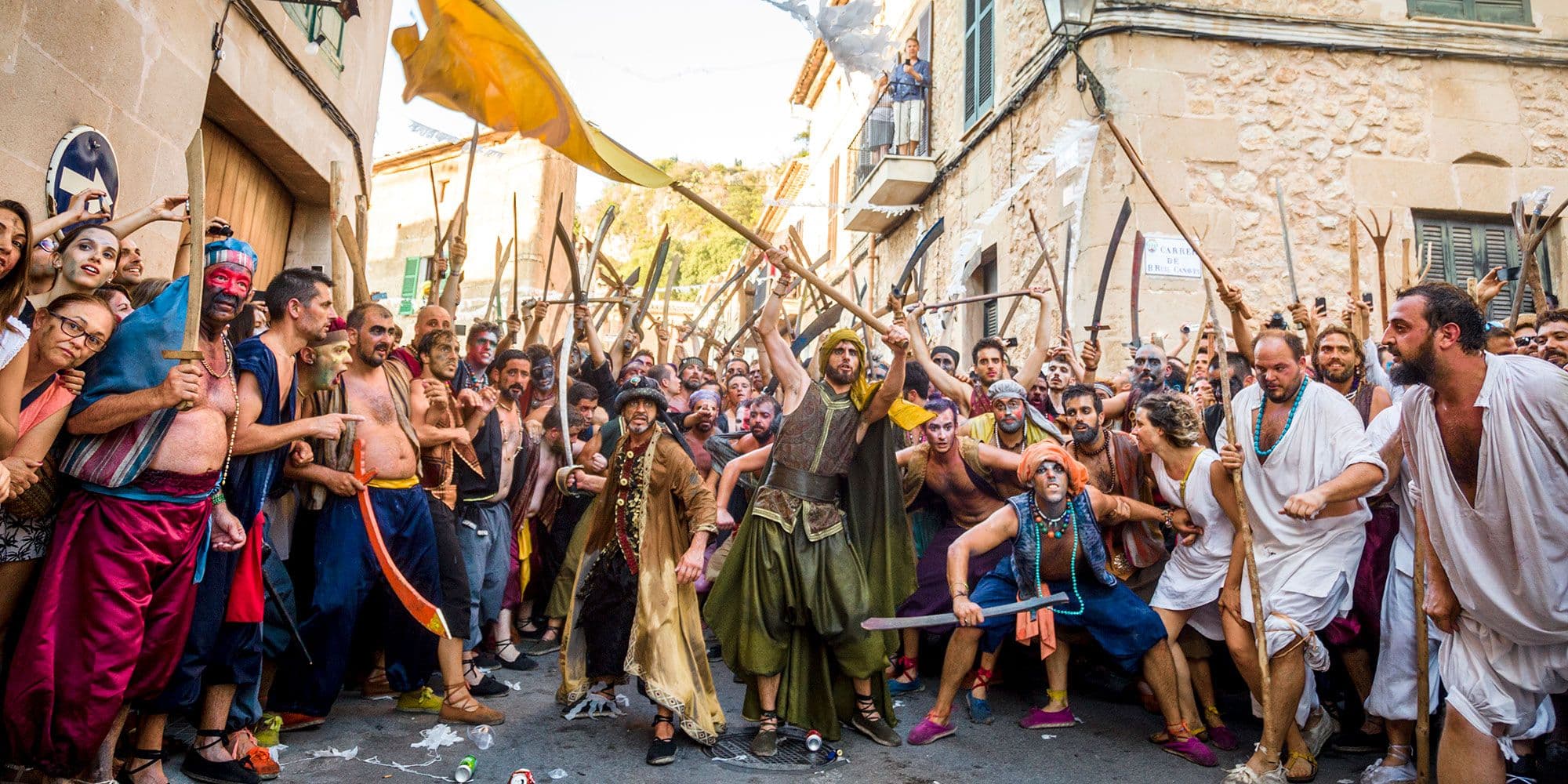
The circuit opens on 2 August in Pollença, where La Patrona builds to the Simulacre de Moros i Cristians — a mock battle that re-enacts the dawn of 31 May 1550, when townsfolk led by Joan Mas drove off the corsair Dragut and his raiders. Two costumed armies, Moors and Christians, fight their way through the old streets until the Christians prevail; it is theatre, history and civic pride fused into one deafening afternoon.
“By the last week of August you can trace a line across the island in gunpowder smoke and drumbeats — a village fiesta every week.”
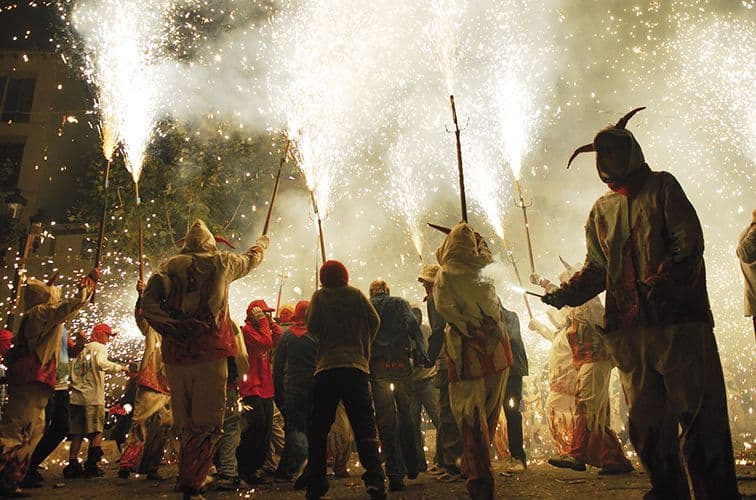
A fortnight later, on 16 August, Alaró marks Sant Roc — the day the town remembers being spared the plague — with its rarest sight: the cossiers, six dancers and a Dama who only take to the streets twice a year, followed after dark by the correfoc of the Dimonis d'Alaró. Eight days on, Sóller turns 24 August into its Nit de Foc, when the Esclatabutzes — figures in sackcloth and bird-man masks — wheel Catherine wheels overhead and shower the crowd with sparks.
The month closes in Felanitx, where Sant Agustí — not strictly the town's own patron, but celebrated with real fervour — throws some of the island's liveliest verbenes: open-air concerts in the Parc Municipal de Sa Torre that run until one in the morning around 28 August. And these four are only the loudest stops. Earlier in the month Artà sends its child-borne cavallets — little horses danced by children — through the streets for Sant Salvador (around 6 August), and Montuïri fields its own celebrated cossiers on the very same 24 August as Sóller. Wherever you land, you are never more than a few days from a fiesta.