For Creators
Download on theApp StoreGet it onGoogle Play
Guía del pueblo · Norte de Mallorca
El pueblo de piedra al pie de la Tramuntana, con su escalinata del Calvari, su mercado del domingo y su festival de música clásica — puerta de entrada al espectacular cabo de Formentor.
Al pie de la Serra de Tramuntana, Pollença es un pueblo de piedra dorada con calles de artistas, cafés y una famosa escalinata de cipreses que sube a una capilla. Su hermana de la costa, el Port de Pollença, dibuja una bahía resguardada y es la puerta de entrada al espectacular cabo de Formentor.
Tap a point for details
El símbolo de Pollença es el Calvari: una escalinata de piedra de 365 peldaños —uno por cada día del año—, flanqueada de cipreses, que sube desde el centro hasta una capilla del siglo XVIII con vistas a la bahía. Abajo, la Plaça Major, rodeada de cafés y presidida por la iglesia, es el corazón del pueblo, y cada domingo por la mañana se llena con uno de los mercados más conocidos de la isla. A las afueras quedan el Pont Romà, un puente de origen antiguo, y el Puig de Maria, un cerro coronado por un monasterio del siglo XIV al que se sube a pie en cosa de una hora.
En verano, Pollença suena a música: desde 1962, el Festival de Pollença lleva conciertos de música clásica al claustro barroco del Convent de Sant Domingo, célebre por su acústica al aire libre. Y luego está la costa. El Port de Pollença tiene el Pine Walk (Passeig Voramar), un paseo entre pinos inclinados sobre el agua y viejas villas mallorquinas; desde allí arranca la carretera al cabo de Formentor, con su faro al final de la península y la playa de Formentor a los pies de la montaña.
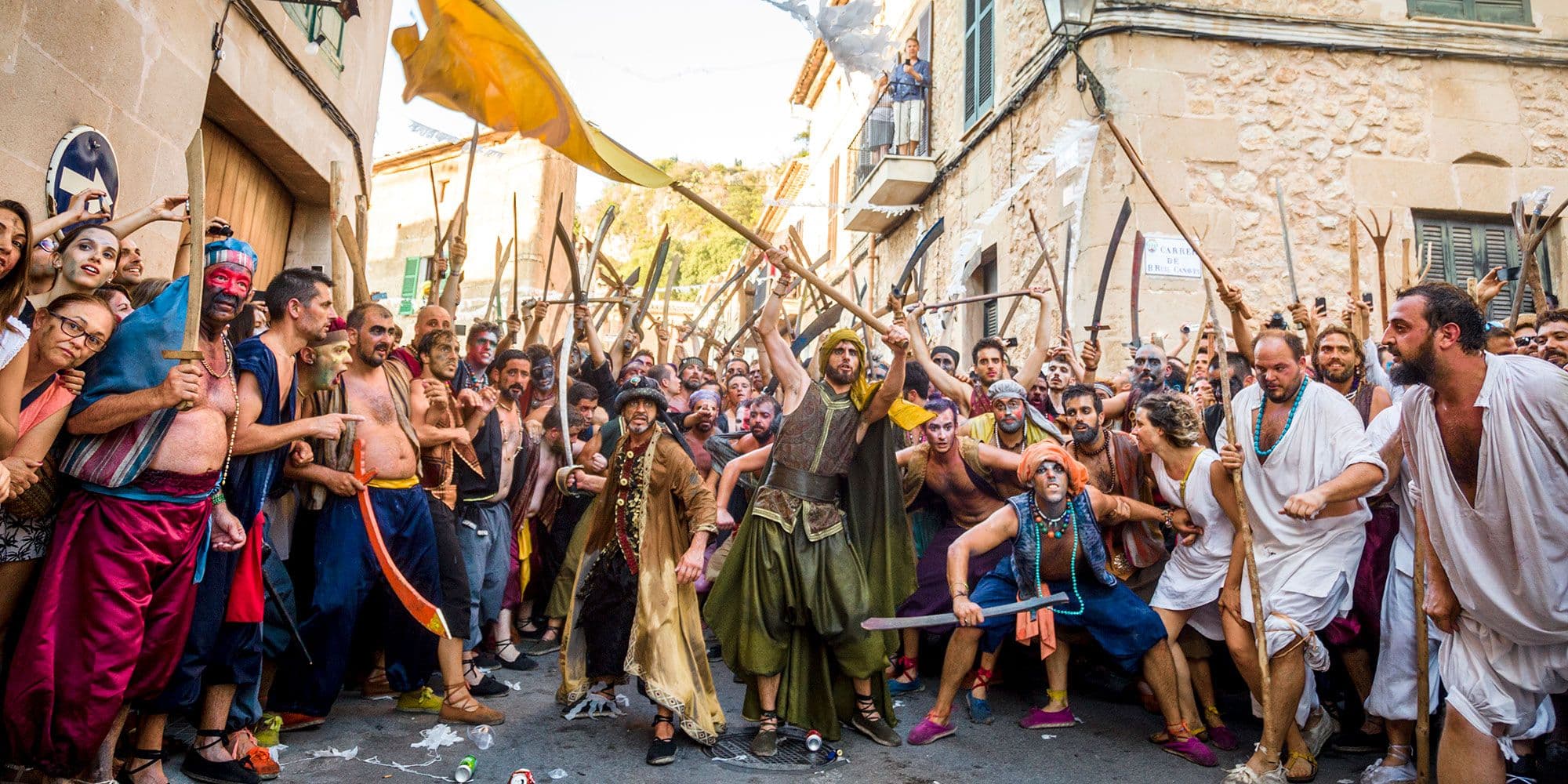
La gran cita del año es La Patrona, el 2 de agosto: tras una decena de días de fiesta, el pueblo revive el Simulacre de Moros i Cristians, una batalla que recrea la defensa de Pollença en 1550 frente al ataque del corsario Dragut. Para llegar, la línea 340 del TIB une Palma con el Port de Pollença, buena base para el mercado del domingo, el Pine Walk y la excursión al cabo de Formentor. Un consejo: visita el casco antiguo un domingo por la mañana, cuando el mercado y las terrazas están en su mejor momento.