01Valldemossa
Serra de Tramuntana
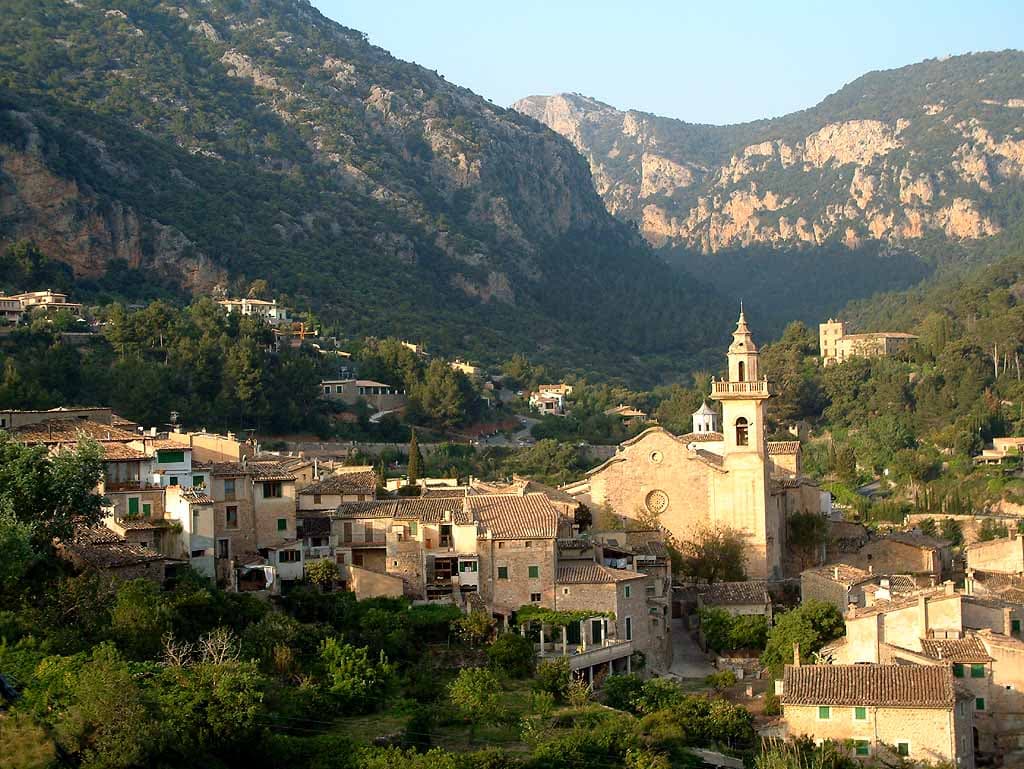
In the winter of 1838–39 Chopin and the writer George Sand rented a cell in the Royal Charterhouse; he composed preludes there while she wrote her memoir, A Winter in Mallorca. The monastery itself began as a 14th-century royal palace King Jaume II raised for his son Sancho before Carthusian monks took it over.
The poet Robert Graves settled here in 1929 and built Ca n'Alluny in 1932 — now his house-museum. The name comes from the Arabic ad-daia, 'village', and the olive terraces tumbling to the sea were first laid by Moorish farmers. An artists' colony has clung to the cliffs ever since.
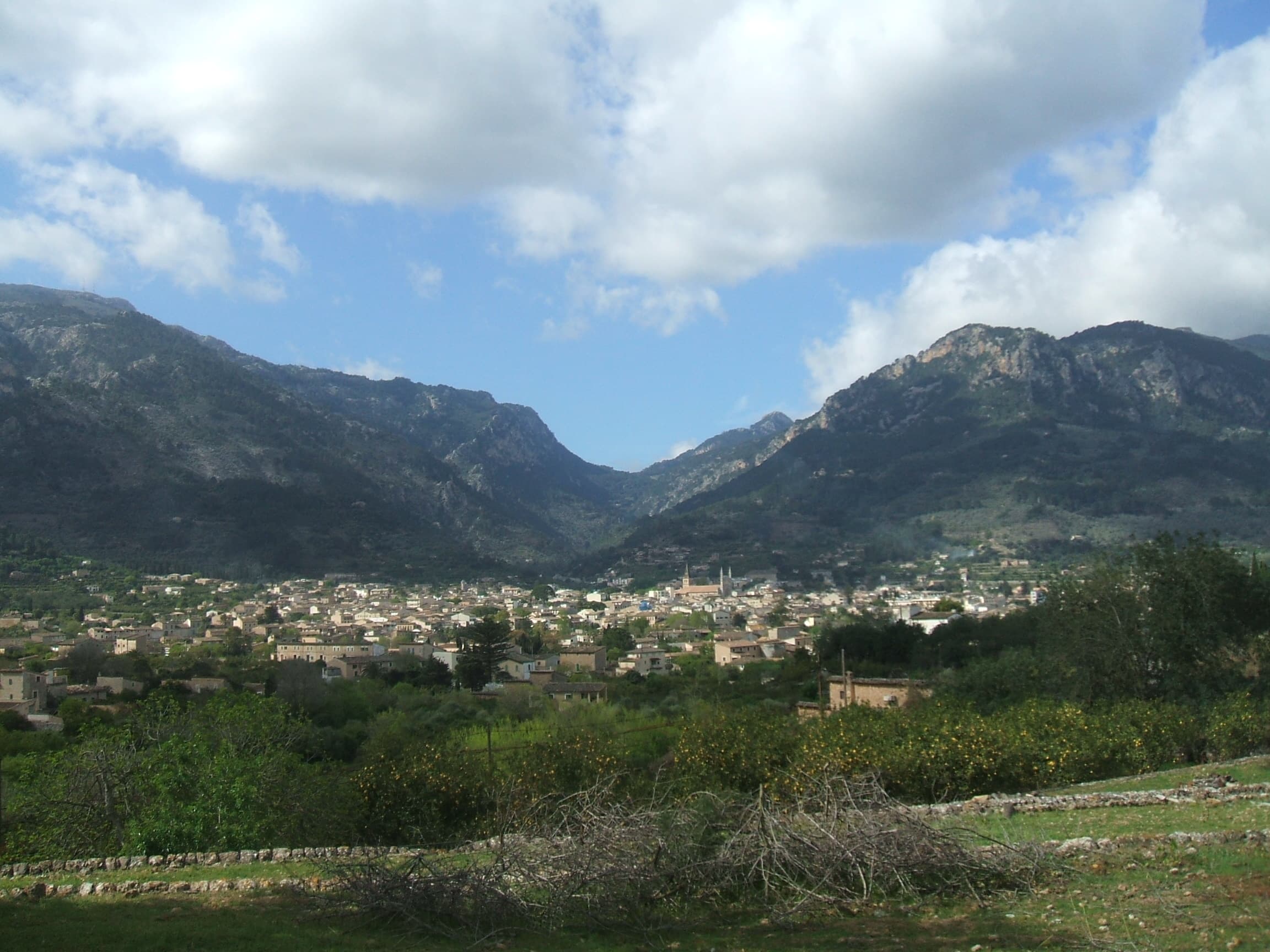
Fortunes made shipping oranges and lemons to France in the 19th century paid for the wooden train that has run from Palma since 1912 — the Orange Express — and the 1913 tram, Mallorca's first electric line, that still rattles down to the port through the 'Valley of Gold'.
04Fornalutx
Serra de Tramuntana
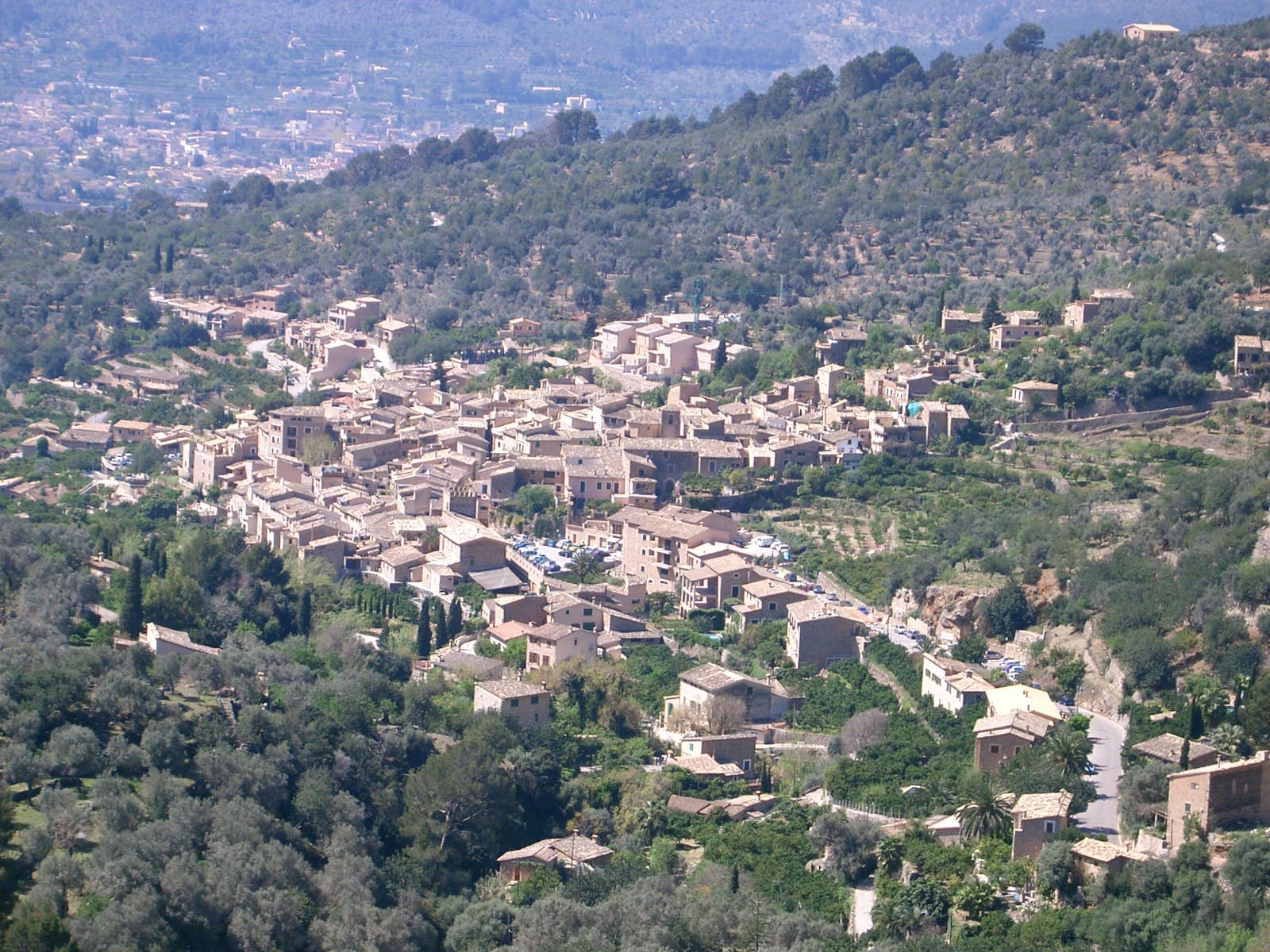
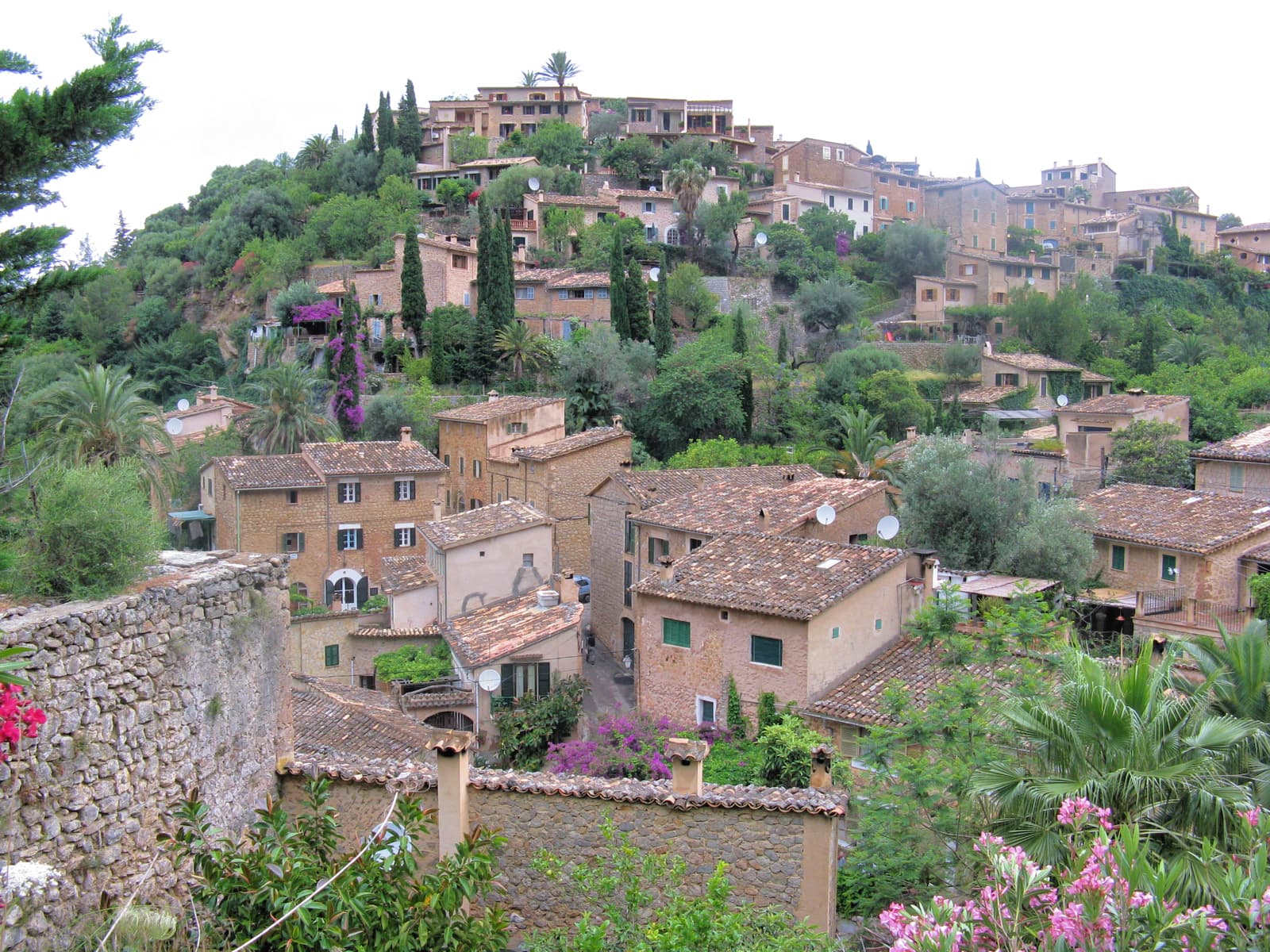
Often called the prettiest village in Spain — and with the accolades to back it: the Second National Prize for Spain's best-kept, most beautifully maintained towns in 1983, and a National Geographic España pick as the prettiest Spanish village to visit in April 2026. Green-shuttered stone houses, lemon terraces and stepped lanes climb the head of the Sóller valley.
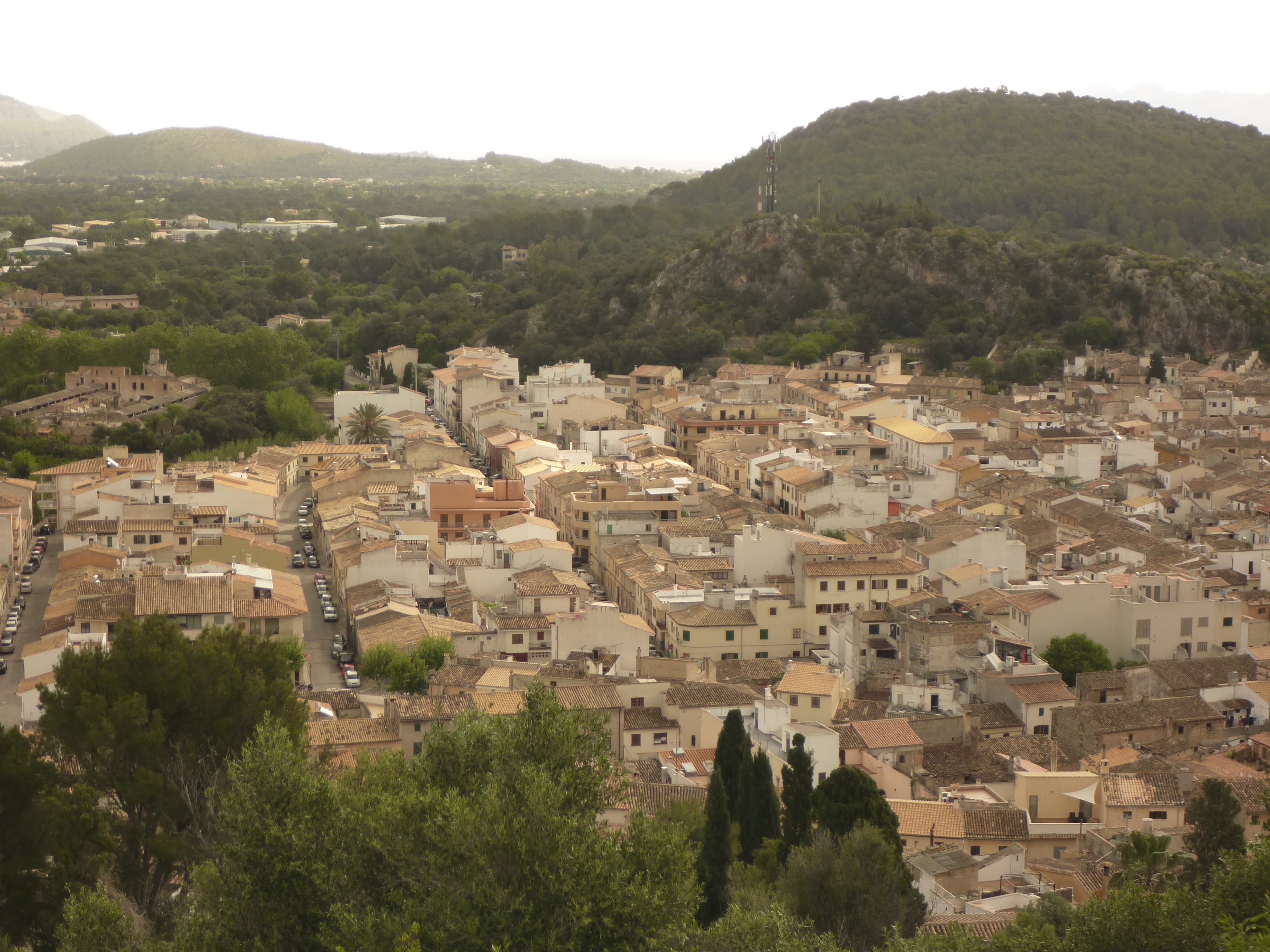
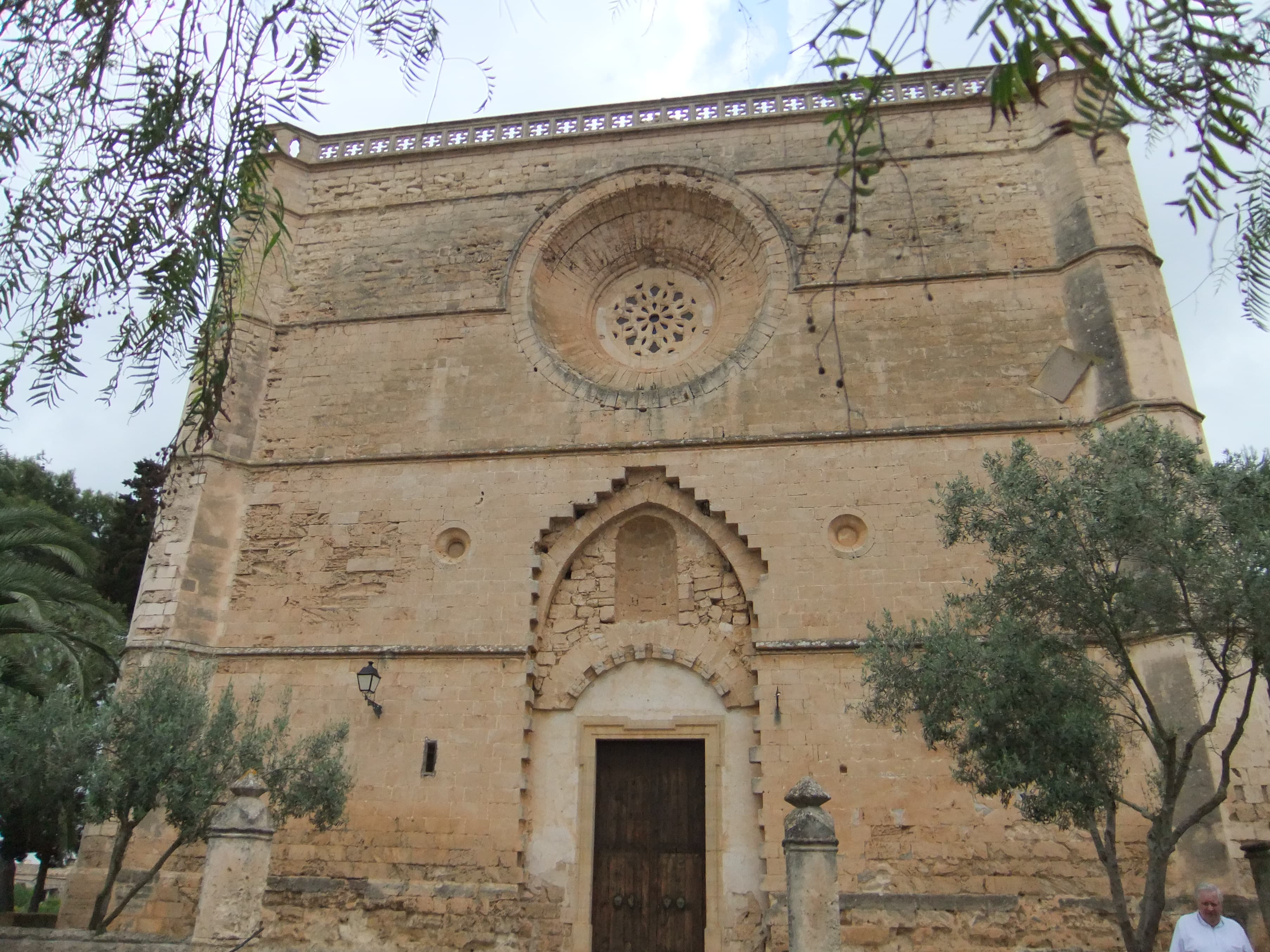
From the old town, the Calvari climbs 365 cypress-lined steps — one for each day of the year — past stone crosses to a late-18th-century oratory, the stage for Pollença's famous Holy Week processions. Opposite rises the Puig de Maria, crowned by a 14th-century hilltop sanctuary.
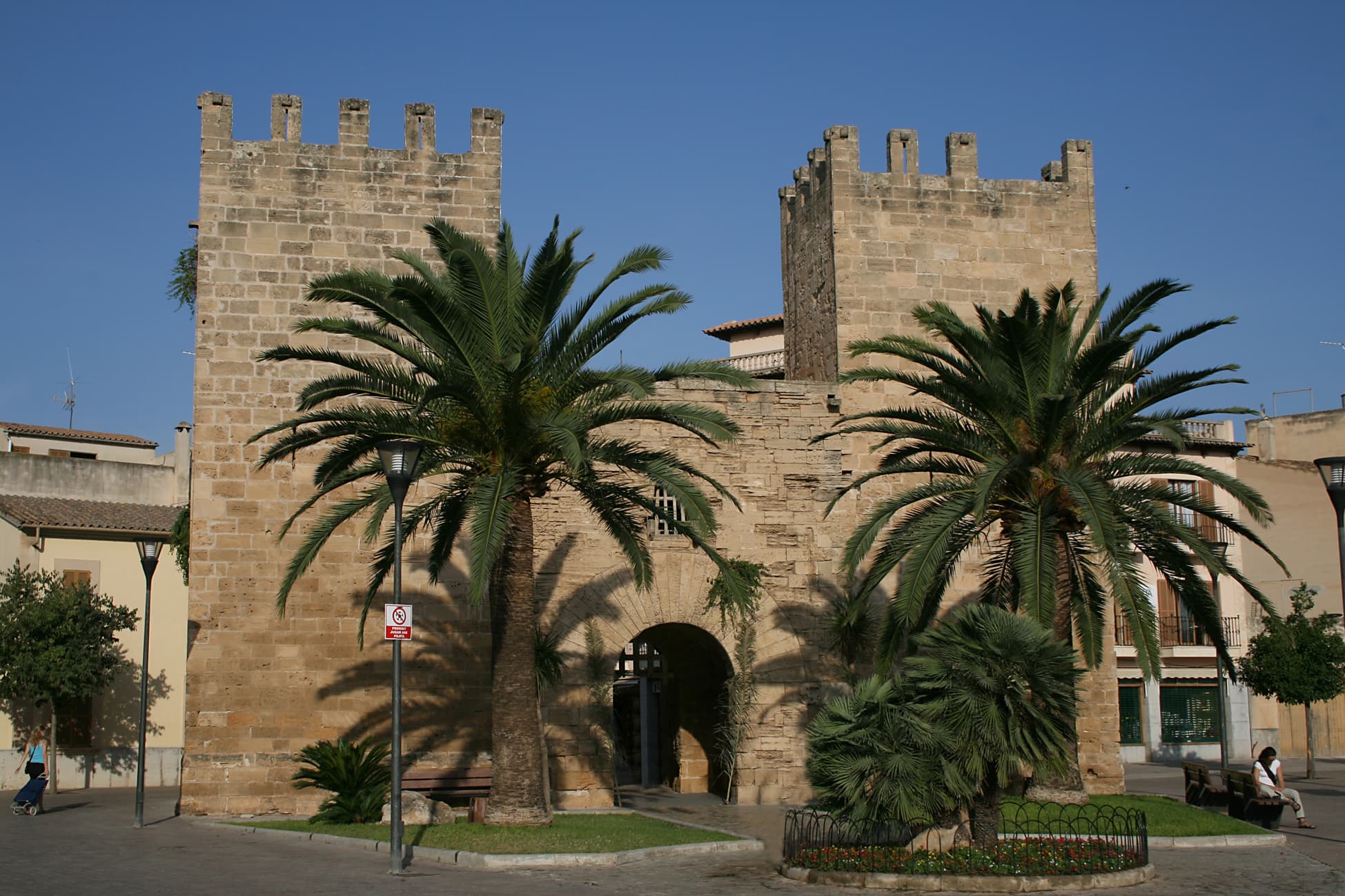
Behind medieval walls completed under King Jaume II in 1362 lie the ruins of Pollentia, founded in 123 BC as the Roman capital of the Balearic Islands — forum, temples and a theatre cut into the rock. The town's name is Arabic too: Al-Qudya, 'the hill'.
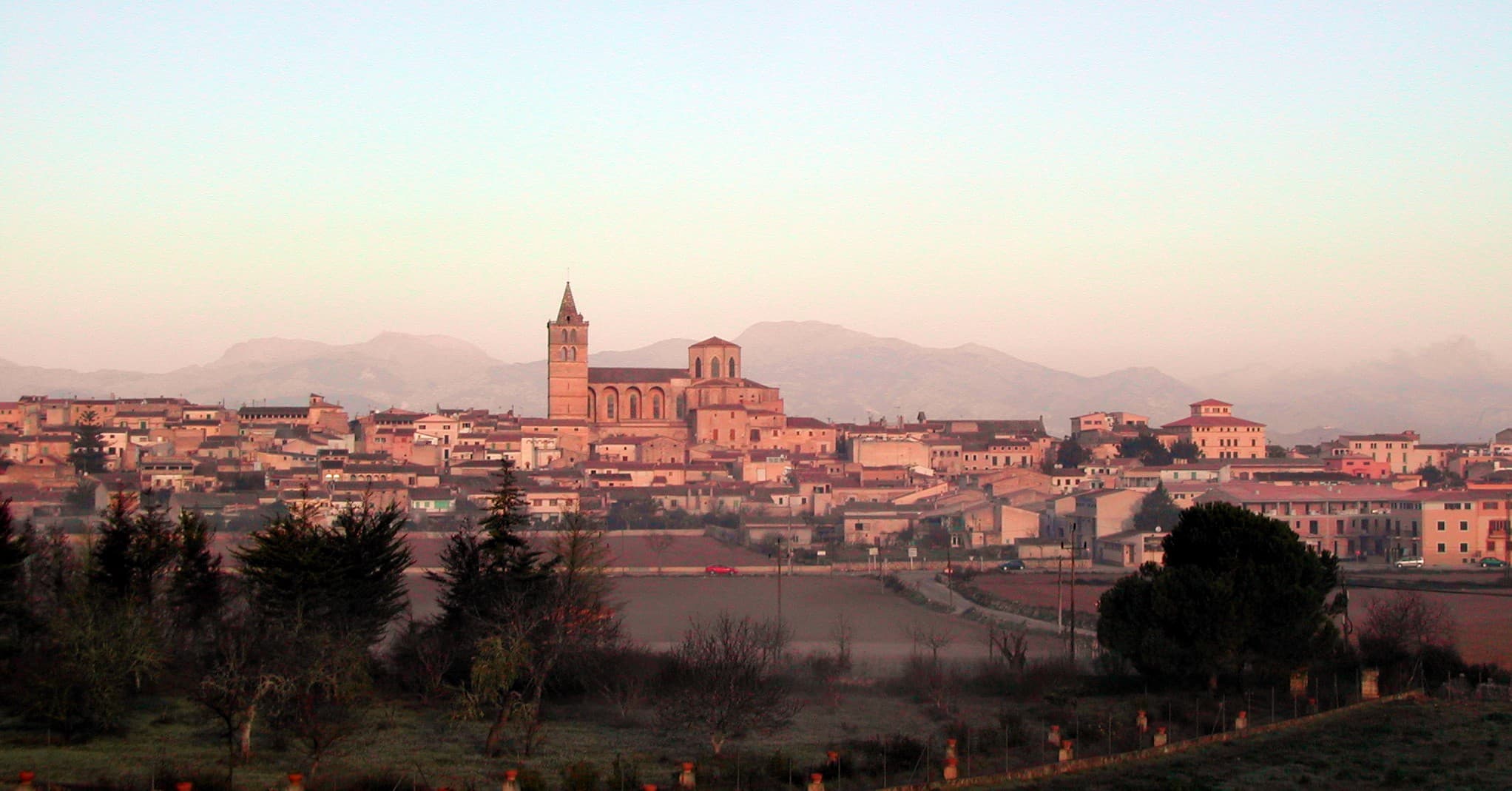
Jaume II made this exact geographic centre of the island a royal town, building his palace here in 1309. Its Wednesday market — decreed by the same king in 1306 — is the oldest on Mallorca, and the only one that still trades in live animals.
This quiet inland town is the birthplace of Fray Juníper Serra, born on 24 November 1713, who went on to found the first Spanish missions of California — San Diego, Carmel and beyond. His boyhood home and a museum in his honour still stand among the sandstone streets.